
I Went to a School Swimming Carnival and What I Saw Was Alarming
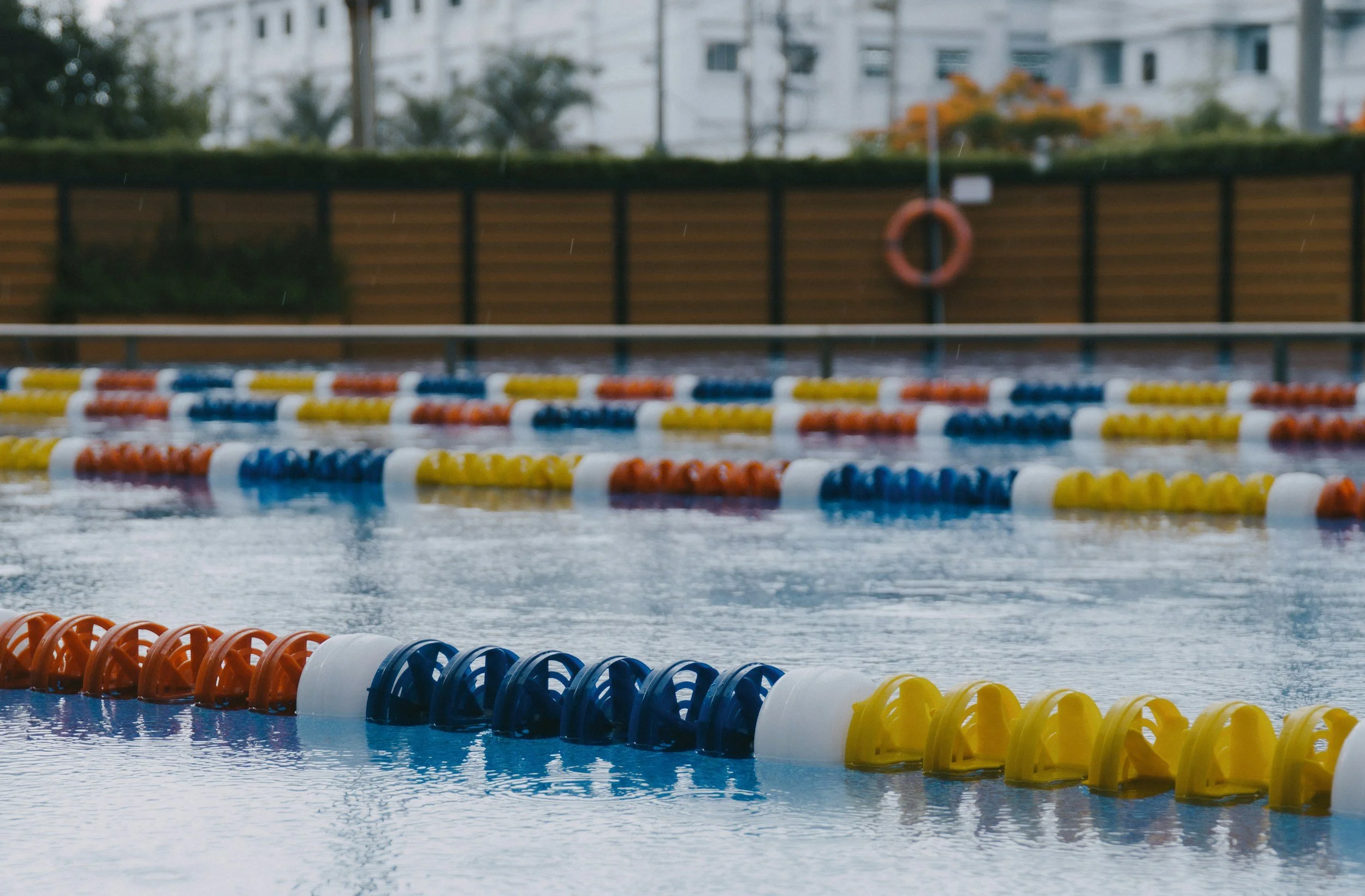
I sat in the stands at a recent High School swimming carnival in southeast Queensland, watching what should have been a celebration of movement, confidence, and participation.
And in many ways, it was. There were bright house colours, loud cheering, and kids laughing with their friends. This particular school should be commended for one important thing: you do not have to qualify to participate. Anyone could enter.
That matters.
Because a school carnival should not be about selecting elite athletes. It should be about participation, inclusion, and giving every child the opportunity to move.
But what I witnessed that day was deeply confronting.
The Illusion of Participation
Despite the open format, most students were not participating. The grandstand was full, but the pool was not. In many races, there were not enough swimmers to fill all eight lanes.
So the students racing were not forced into events; they had chosen to put their hand up to swim, and many could not swim 50 metres.
Which raises an uncomfortable question:
If these are the students who opted in, what about the ones who did not?
A Hard Truth: Many Kids Cannot Swim
What I saw in the water was not just a range of ability. It was a gap.
Yes, there were some excellent swimmers. You could clearly see the children who were part of swimming clubs. Their technique, confidence, and ease in the water stood out immediately. But they were the minority.
Most students struggled to swim 50 metres. Some stopped and put their feet down. In multiple races, lifeguards had to intervene and throw flotation devices into the pool.
I did some digging and found research from Royal Life Saving Australia that backs up what I saw. The report highlights that primary-aged students are struggling to meet basic swimming benchmarks, with teachers estimating that 48% of Year 6 students cannot swim 50 metres or tread water for two minutes, and parents reporting similar concerns for 46% of 11-12-year-olds. Alarmingly, swimming skills do not appear to improve in high school; teachers estimate that 39% of Year 10 students still cannot meet the Year 6 benchmark. Even more concerning, the lifesaving skills of older students are dangerously weak—teachers estimate that 84% of 15-16-year-olds are unable to swim 400 metres or tread water for five minutes, a fundamental lifesaving requirement and the benchmark for 17-year-olds. These statistics make it clear that many students are leaving school without the most basic water safety skills.
Let that sink in. These are high school students in coastal Queensland, in a country surrounded by water, where swimming is not just a sport but a life skill. And many of them cannot safely complete one length of the pool.
This Is Not Just About Swimming
This is not an isolated issue. I have seen the same pattern at cross-country events. What should be a running event has, in many schools, become a walking event. Not because students are disengaged or unmotivated, but because many simply cannot run the distance.
This is not a participation problem. It is an ability problem.
The Bigger Question: What Legacy Are We Leaving?
With the 2032 Brisbane Olympics on the horizon, there is increasing conversation about “legacy.” Most of that conversation focuses on infrastructure—stadiums, facilities, world-class venues. And yes, those things matter.
But I keep coming back to a more fundamental question:
What about the physical literacy of our children? What is the legacy we are leaving in their bodies? Because right now, from what I can see sitting on the sidelines, we are raising a generation of young people who:
Cannot swim safely
Cannot run basic distances
Struggle with coordination and fundamental movement skills
This is not about blame. It is about awareness.
When Did Movement Become Optional?
How did we get to a point where physical education is no longer prioritised?
Where foundational skills like running, jumping, and swimming are no longer guaranteed outcomes of a child’s education?
In a country like Australia, this should concern all of us.
Physical literacy is not about sport performance—it is about:
Safety
Confidence
Health
Lifelong wellbeing
We Can Do Better
The solution is not to make school sport more competitive. It is to make movement more consistent, more accessible, and more foundational.
We need to:
Prioritise physical education in schools
Focus on skill development, not just events
Create environments where all children build competence before competition
Recognise that participation without capability is not enough
Because putting a child in a race does not mean they are equipped to complete it and the kids know it.
Final Thought
The carnival was fun, and the energy was great. But underneath it all was a reality we cannot ignore.
If we are serious about legacy, it cannot just be about what we build.
It has to be about what we build in our children.